Vasudhaiva Kutumbakam — put into practice. Many local families. One human family.
Deuka is building a governed federation of locally rooted human communities.
Within each local Deuka family, people belong before they are classified as beneficiaries, donors, workers, customers or service providers. They contribute according to their capacity and receive support according to their need.
Local relationships create trust, care and responsibility. Federation allows local families to share knowledge, opportunities, markets, technology and resources across regions and countries.
JOIN A FOUNDING CONVERSATION
See How Deuka
Works
What would change if belonging came first?
Most institutions engage people through a transaction.
A person enters as a customer, employee, beneficiary, donor, volunteer, patient or applicant. Each institution responds to one part of life, while the person continues to carry the whole burden of health, livelihood, learning, care, ageing, risk and relationship.
Services may reach people without ending isolation.
Deuka begins with a different proposition:
A person first enters as family.
Care, contribution, learning, enterprise and mutual support emerge from that belonging.
What is Deuka?
Deuka is a federated family and mutuality system.
It is neither a conventional charity nor a centralised membership platform. It is a network of autonomous, locally rooted families connected through a common covenant.
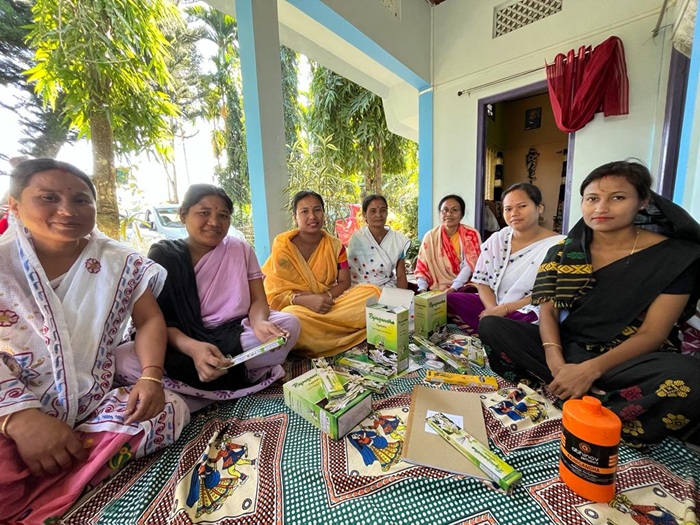
Each local family remains close enough for people to know one another, recognise needs, build trust and accept responsibility.
The wider federation allows these families to exchange capability without losing their local identity or agency.
Belonging is local. Solidarity is global.
The Principles
Belonging first
Every member enters as a person with dignity, relationships, abilities, needs and responsibilities—not as a category.
Contribution according to capacity
Contribution may take the form of money, time, care, knowledge, skill, relationships, assets, enterprise or leadership. Not everyone contributes in the same way or at the same time.
Support according to need
A person may receive care, protection, opportunity or resources without being reduced to dependency or placed in permanent moral debt.
Local agency with shared safeguards
Local families identify priorities and make decisions close to the people affected. A common covenant protects dignity, inclusion, transparency, accountability and freedom of conscience.
How Deuka Works
1. Person and circle of care
Every person is connected to a household, friendship network or circle of care.
2. Local Deuka family
Households and care circles come together in a human-scale local family. Members identify needs, capabilities, responsibilities and opportunities.
3. Shared local institutions
The family develops practical systems for care, learning, livelihoods, enterprise, risk support, elder support and community decision-making.
4. Clusters of families
Local families collaborate across a district or region to share specialised capability, infrastructure, markets and knowledge.
5. Global federation
Autonomous families and clusters connect across countries through a shared covenant, common safeguards and federated institutions. The federation supports collaboration. It does not erase local identity or centralise control.
What Happens Inside
a Local Deuka Family?
A local family may gradually develop systems for:
- Preventive health, care and emergency support
- Learning across generations
- Livelihood creation and enterprise
- Shared tools, spaces and community assets
- Child, elder and disability support
- Local risk pooling and mutual assistance
- Community dialogue and conflict resolution
- Environmental responsibility
- Connections to wider knowledge, markets and opportunities
Each family will develop differently according to its context. Deuka provides the architecture through which these functions can be held together.
Economic Life Through Aja
Economic activity should serve the family—not the other way around.
Aja is the economic capability layer of Deuka.
It helps local families develop livelihoods, enterprises, supply routes, markets, shared assets and systems of exchange.
Aja is intended to help communities:
- Build viable local enterprises
- Connect producers with dependable demand
- Share infrastructure and productive assets
- Improve access to markets, technology and finance
- Retain greater value within the community
- Reduce forced dependence on distant institutions
- Create pathways for contribution beyond money
Economic strength supports the wider purpose of belonging and whole wellbeing. It does not replace it.
The Spiritual Foundation
Prem is the essence.
Samarpan is the threshold.
Tyag is the discipline.
Seva is the action.
Deuka’s spiritual foundation is not a decorative statement of values.
It is intended to shape membership, leadership, governance, contribution, conflict resolution and the use of shared resources.
Samarpan does not mean surrendering dignity, agency, rights or conscience. It means releasing egoic control in order to act for a larger whole.
Tyag does not require deprivation. It asks whether personal power and resources can be held responsibly.
Seva is not one-way charity. It is the practical expression of belonging.
A Credible Foundation for a New Institution
Deuka grows from more than twenty-five years of Drishtee’s work with rural communities, decentralised enterprise, community institutions and local delivery systems.
That experience provides relationships, operating knowledge and field infrastructure.
But Deuka is not a renaming of existing Drishtee programmes.
The complete Deuka model—including its membership architecture, covenant, governance, economic systems, technology, safeguards and federation—must now be consciously designed, tested and demonstrated.
What Is Being Built Now?
The founding phase will focus on:
- Defining the Deuka covenant
- Designing local-family governance
- Establishing membership and contribution systems
- Integrating care, learning and livelihood functions
- Developing Aja and the community economy
- Creating transparent resource-allocation mechanisms
- Building appropriate federated technology
- Demonstrating the model through locally grounded pilots
- Establishing independent learning and research
- Designing a pathway beyond permanent founder dependence
The aim is not rapid expansion before the institution is ready.
The aim is to create a model that is human, governable, testable and capable of being carried by communities themselves.
Join the Founding Journey
Deuka is seeking founding partners who can help build the institution—not merely fund an isolated activity.
We welcome conversations with people and institutions working in:
- Catalytic and patient capital
- Community governance
- Institutional design
- Technology and federated systems
- Research and measurement
- Livelihoods and community enterprise
- Health, care and wellbeing
- Spiritual and civilisational thought
- International networks and local implementation
The central question is not how to scale another programme.
It is how to build a system in which millions of people can experience genuine belonging without sacrificing local intimacy, dignity or agency.
JOIN A FOUNDING CONVERSATION
Email: deuka@drishtee.in
India · United States · Japan